
Artificial Intelligence
What is Artificial Intelligence?
AI is based on various technologies and methods, including machine learning, deep learning, neural networks, natural language processing, and computer vision. All these technologies are designed to enable machines to learn and make decisions based on data collected from various sources.

How does Artificial Intelligence work?
Artificial Intelligence (AI) works by utilizing algorithms and mathematical models to train machines to perform human-like tasks, such as pattern recognition, speech recognition, decision-making, and even creativity. Essentially, AI is based on the concept of machine learning, where machines learn from examples and data to exhibit intelligent behavior.
To make AI work, there are several steps that must be followed:

Data
- Data collection: A key aspect of AI is the amount of data required to train the machines. Data collection can be done in various ways, such as through sensors, cameras, microphones, or even by analyzing existing databases.
- Data preparation and processing: Once the data is collected, it must be processed to extract relevant information. This process involves cleaning the data, removing noise, and standardizing the data to fit the desired input for the model.

Model
- Model building: The model is the core of AI and involves building a mathematical representation of the data. There are various types of models, such as neural networks, decision trees, and regression models, all of which use different algorithms and approaches.
- Model training: The model must be trained with the collected data to enable it to learn. During training, the model adapts to the data and adjusts to the patterns stored within it.
- Model testing and validation: The model must be tested and validated to ensure it functions correctly. This is done by running the model with new data that was not used during the training phase.
- Implementation: Once the model has been successfully tested, it can be put into production to perform tasks and solve problems.
It is important to note that AI is never perfect and there is always room for improvement. Training machines to exhibit intelligent behavior can be complex and requires significant expertise. Furthermore, there are ethical considerations in the development and implementation of AI. It is therefore essential to carefully consider the consequences of AI technologies and use them responsibly.
What you will learn about Artificial Intelligence
Artificial intelligence for beginners
- Learn the basic principles: To get started with AI, it is important to understand the fundamentals. Learn the concepts of machine learning, neural networks, deep learning, natural language processing, and other key components of AI. Various resources are available online, such as tutorials, online courses, and documentation from open-source AI libraries.
- Choose a programming language: AI is based on programming, so it is essential to learn how to code. Several programming languages are used in AI, such as Python, R, and C++. Python is one of the most popular languages for AI because it is easy to learn and has an extensive set of AI libraries.
- Choose an AI framework: Several AI frameworks are available that simplify the building of AI models. Popular AI frameworks include TensorFlow, PyTorch, Keras, and Scikit-learn. Each framework has its own features and functions, so it is important to research which framework best suits your needs.
- Collect data: To train AI models, you need to collect data. You can gather data from various sources, such as public datasets or data you have collected yourself. It is important to ensure that the data is representative of the tasks you want to perform.
- Build and train the model: Once you have collected data and chosen an AI framework, you can begin building and training the model. Start with a simple model and add complexity as you gain more experience.
- Test and evaluate the model: After the model is trained, it is important to test and evaluate it to ensure it works as intended. Use test data to verify the model and employ evaluation metrics such as accuracy, precision, and recall to assess its performance.
- Apply the model: After testing and evaluating the model, it can be applied to real-world problems and tasks.
Artificial intelligence
Before diving into the details of artificial intelligence, it is important to be familiar with the key aspects of AI. Are you new to Artificial Intelligence? Then be sure to read these blogs first:
No Results Found
The page you requested could not be found. Try refining your search, or use the navigation above to locate the post.

Learning artificial intelligence
Juvo regularly organizes webinars and info sessions on artificial intelligence. We guide you through the latest developments and techniques and answer your questions.
Advantages and disadvantages of Artificial Intelligence
Advantages of Artificial Intelligence
- Improved efficiency: AI can perform tasks faster and more efficiently than humans. This allows companies to save time and money. For example, machines can process and analyze large amounts of data, enabling businesses to make better decisions.
- Increased accuracy: AI works more accurately than humans. This reduces errors and improves the quality of products and services. For example, machines can detect and correct errors in a production process before they leave the facility.
- Enhanced safety: AI can be used to perform tasks that are dangerous for humans, such as handling hazardous substances and working in dangerous environments. This can improve worker safety and reduce the costs associated with workplace accidents.
- New discoveries and innovations: AI can be used to generate new discoveries and innovations that would otherwise not be possible. For example, machines can discover patterns in data that help scientists gain new insights into complex problems.
- Improved customer service: AI can be used to enhance customer service through chatbots, voice assistants, and recommendation systems. This can improve the customer experience and help companies serve their clients better.
- Better decision-making: AI can assist in making better decisions by analyzing large volumes of data and identifying patterns and trends. This can help companies improve their strategies and outcomes.
Disadvantages of Artificial Intelligence
- Lack of human intuition: AI is based on mathematical models and algorithms and therefore sometimes cannot replicate the human intuition and creativity required for certain tasks. This can lead to incorrect decisions and poor performance in specific scenarios.
- Data dependency: AI relies on large amounts of data to learn and can therefore only perform based on the quality of that data. If the data is incomplete, inaccurate, or biased, the model may produce incorrect results.
- Lack of transparency: Some AI algorithms are complex and opaque, making it difficult to understand how they work and why they make certain decisions. This can lead to a lack of trust in the technology and result in legal or ethical issues.
- Privacy and security: AI processing of large amounts of data can lead to privacy breaches for individuals and organizations. Furthermore, AI systems are vulnerable to security risks, such as hackers attempting to manipulate or exploit the model.
- Unemployment: AI can lead to the automation of certain tasks and the replacement of workers, which may result in job losses in some sectors.
- Ethical issues: AI can be used to make decisions that are ethically controversial, such as determining access to healthcare or predicting criminal behavior. This can lead to injustice and discrimination.
When is Artificial Intelligence interesting?
- When processing large amounts of data: AI can be used to process and analyze vast datasets to gain insights and make better decisions.
- When automating tasks: AI can be used to automate tasks that were previously performed manually, saving time and resources while improving efficiency.
- When improving accuracy: AI can be used to enhance accuracy and reduce errors in tasks such as fraud detection or diagnosing medical conditions.
- When creating new solutions: AI can be used to create new solutions that would otherwise be impossible, such as identifying new medications or improving energy efficiency.
- When improving user experience: AI can be used to enhance the user experience, such as personalizing recommendations based on user behavior or improving speech recognition technology.
- When improving safety: AI can be used to enhance safety, such as detecting threats or preventing accidents.

Standards within Artificial Intelligence
- Ethics and transparency: AI systems must be developed and used in an ethically responsible manner. Standards in ethics and transparency are intended to ensure that AI systems are designed with respect for human values, rights, and privacy. These standards emphasize the need for transparency in the design and use of AI systems.
- Data integrity and security: AI systems rely on data, and therefore this data must be secure, reliable, and accurate. Standards for data integrity and security are developed to ensure that data is managed, stored, and processed according to the highest data security norms.
- Interoperability: AI systems must be able to work with other systems and integrate seamlessly into existing infrastructure. Interoperability standards are intended to ensure that AI systems can operate in a heterogeneous environment and collaborate with other systems and devices.
- Quality and performance: Standards for quality and performance are developed to measure and improve the performance of AI systems. These standards include guidelines for testing, validating, and evaluating AI systems to ensure they meet requirements for accuracy, reliability, and performance.
- Development processes: Standards for development processes are developed to ensure that AI systems are created in a consistent and reproducible manner. These standards contain guidelines for the development, testing, implementation, and maintenance of AI systems to ensure they are developed according to the highest quality and performance standards.
Commonly used technologies, programming languages, and tools for AI
- Programming languages: Python is currently the most popular programming language for AI applications due to its extensive set of libraries and frameworks, such as NumPy, Pandas, TensorFlow, Keras, and PyTorch. Other frequently used languages include R, Java, and C++.
- Machine learning frameworks: Several frameworks are used to implement machine learning algorithms, including TensorFlow, Keras, PyTorch, and Scikit-learn. These frameworks often provide a range of tools and functions for building and training machine learning models.
- Deep learning frameworks: Deep learning is a subfield of machine learning focused on the use of neural networks and is often used for image recognition and natural language processing. Popular deep learning frameworks include TensorFlow, Keras, PyTorch, and Caffe.
- Big data frameworks: Big data frameworks such as Apache Hadoop and Apache Spark are often used to process and analyze large amounts of data.
- NLP (Natural Language Processing) tools: NLP is a subfield of AI focused on understanding human language. Popular NLP tools include NLTK, SpaCy, Stanford CoreNLP, and Gensim.
- Robotics tools: Robotics is an application of AI focused on developing autonomous robots. Popular tools for robotics include ROS (Robot Operating System) and Gazebo.
- Cloud computing platforms: Cloud computing platforms such as Amazon Web Services (AWS), Google Cloud Platform (GCP), and Microsoft Azure offer AI-optimized services and tools for machine learning and deep learning.
Artificial intelligence technologies
Artificial intelligence is driven by various tools, techniques, programming languages, and technologies. To fully understand AI, one must also know the underlying logic.
No Results Found
The page you requested could not be found. Try refining your search, or use the navigation above to locate the post.
Artificial Intelligence: automation
- Production: AI can be used to automate production processes, such as monitoring production lines and detecting defects. This can lead to fewer errors and reduced overproduction.
- Customer service: AI can be used to automate customer service, such as using chatbots to answer customer inquiries. This can lead to faster, more efficient customer service and cost savings for companies.
- Finance: AI can be used to automate financial processes, such as fraud detection and credit risk assessment. This can lead to better decision-making and cost savings for businesses.
- Healthcare: AI can be used to automate healthcare tasks, such as diagnosing medical conditions and predicting epidemics. This can lead to better and faster diagnoses and treatments, saving costs in the healthcare sector.
- Logistics: AI can be used to automate logistical processes, such as route planning and delivery optimization. This can lead to faster deliveries and more efficient logistics.
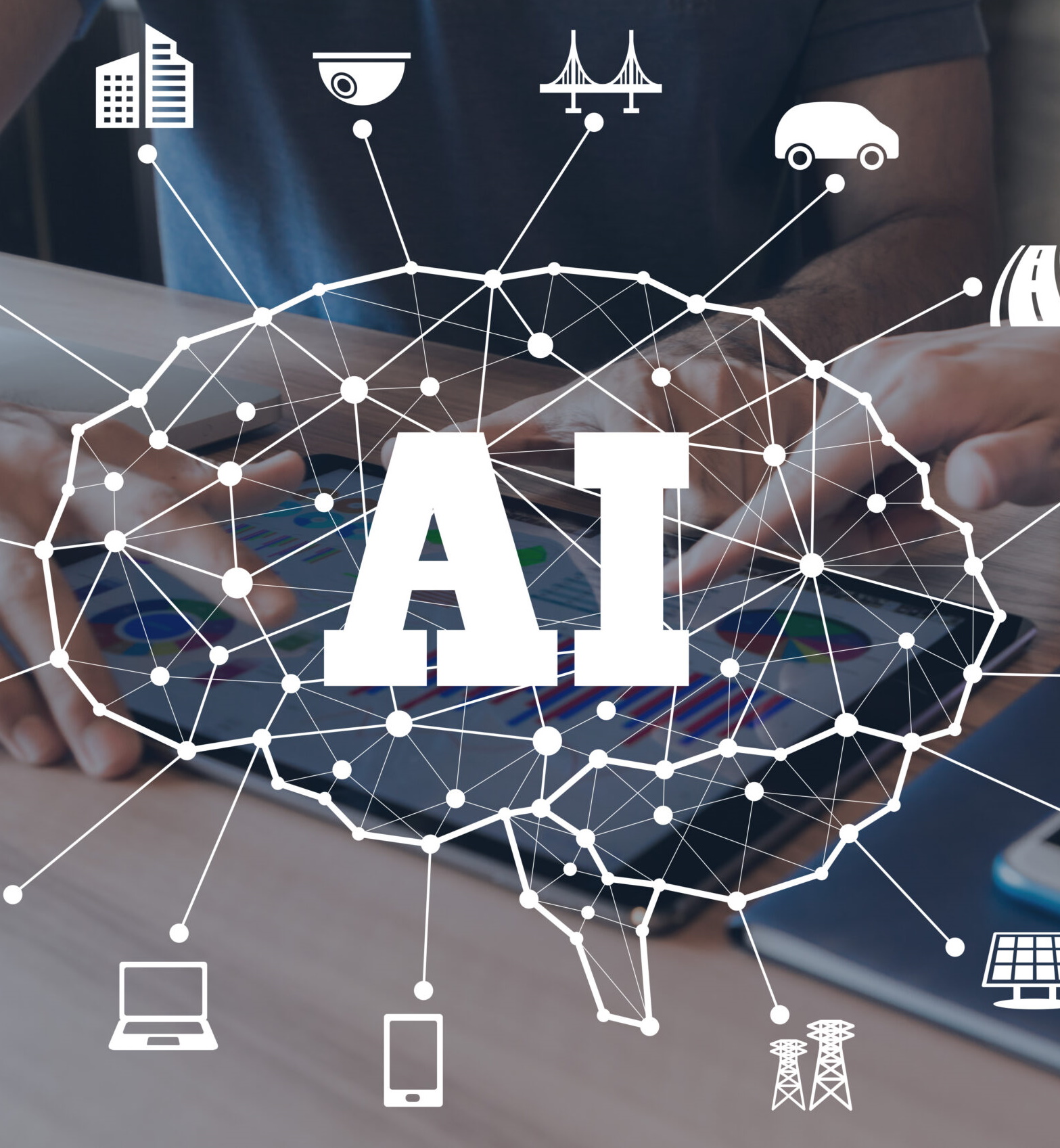
Artificial Intelligence examples
Chatbots
Chatbots are automated virtual assistants that use AI to enable natural language processing and simulate human conversation. They are frequently used for customer service and consumer interactions.
Self-driving cars
Self-driving cars use AI and machine learning to detect objects and traffic around them and navigate without human intervention. Companies like Tesla, Google, and Uber are actively developing this technology.
Medical diagnosis
AI is used to analyze medical images, such as X-rays and MRI scans, to assist in making diagnoses. AI systems can even interpret medical images in the same way as physicians, allowing for faster and more accurate diagnoses.
Fraud detection
AI is used to detect fraud in the financial sector. AI systems can analyze large volumes of data and detect patterns and anomalies that indicate fraudulent activities.
Language translation
AI is used for automatic language translation. Google Translate and Microsoft Translator are well-known examples of this technology, enabling communication across different languages.
Predictive maintenance
AI is used for predictive maintenance in industry and the transport sector. AI systems can analyze data from sensors and machines to identify problems before they occur, enabling preventive maintenance and avoiding unplanned downtime.
Artificial creativity
AI is used to create artificial creativity, such as composing music, writing poetry, and creating art. AI systems can mimic human creativity through machine learning algorithms.
What does an AI engineer do?
An AI engineer (also known as a machine learning engineer) is responsible for designing, developing, and implementing systems that utilize artificial intelligence (AI). This involves working with large datasets and developing algorithms and models to analyze and understand this data.
In general, the work of an AI engineer requires a strong background in computer science, mathematics, and statistics, as well as knowledge of programming languages such as Python, R, and Java. They must also stay informed about the latest developments in AI and machine learning and integrate these into their work to develop innovative solutions for business problems.
Working as an AI engineer
Looking to build a career as an AI Engineer? At Juvo, you will find the most challenging AI Engineer jobs.
AI Engineer vacancy
Artificial Intelligence VS Machine Learning
Artificial Intelligence (AI) and Machine Learning (ML) are two closely related concepts, but there is an important difference between them.
AI is focused on developing systems that can perform tasks requiring human intelligence, such as recognizing speech or images, making decisions, and executing tasks. AI aims to mimic human intelligence and perform tasks in a way that resembles human intelligence.
Machine Learning, on the other hand, is a subfield of AI focused on developing algorithms that can use data to learn and improve. Machine Learning is aimed at building systems that can learn and improve as they process more data. Machine Learning algorithms are capable of analyzing data, learning to recognize patterns, and making predictions and decisions based on those patterns.